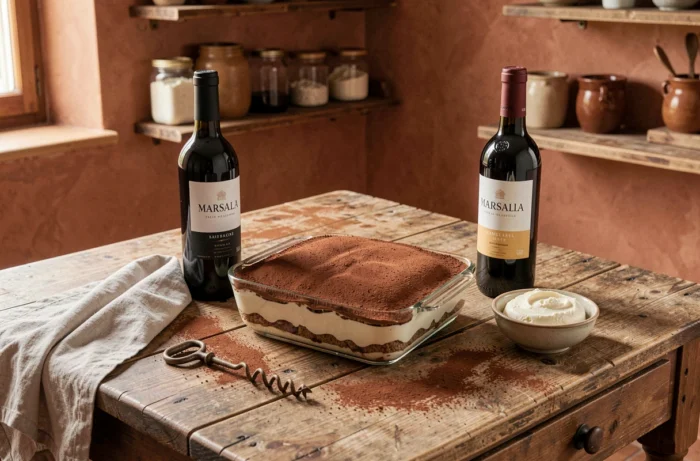
When preparing a homemade tiramisu, the first instinct is often to pour a splash of rum or marsala into the soaking coffee without much thought. However, the choice of alcohol in tiramisu changes the aromatic direction of the dessert, and the dosage determines whether the mascarpone cream retains its roundness or tips into bitterness. Some concrete guidelines help make the right choice based on the desired flavor profile.
Marsala, amaretto, or rum: what each alcohol brings to tiramisu
Dry or semi-dry marsala, a sweet Sicilian wine, remains the most common choice in Italian tradition. Its woody and slightly caramelized profile blends into the coffee without overpowering it. This creates a subtle aromatic backdrop that keeps the mascarpone in the foreground.
Amaretto, an almond liqueur, pushes the tiramisu towards a sweeter and rounder register. Amaretto works best with lightly roasted coffee, as the bitterness of a very strong espresso conflicts with the sweetness of the almond. With medium-roasted coffee, the pairing holds up well.
Amber rum brings warmth and spicy notes. It suits palates looking for a more pronounced dessert, but it quickly masks the finesse of the mascarpone if the dosage is too high. On the L’Entracte Gourmand website, you can find a complete overview of these options with dosage guidelines suited to each alcohol.
Alcohol dosage in tiramisu: the limit not to exceed
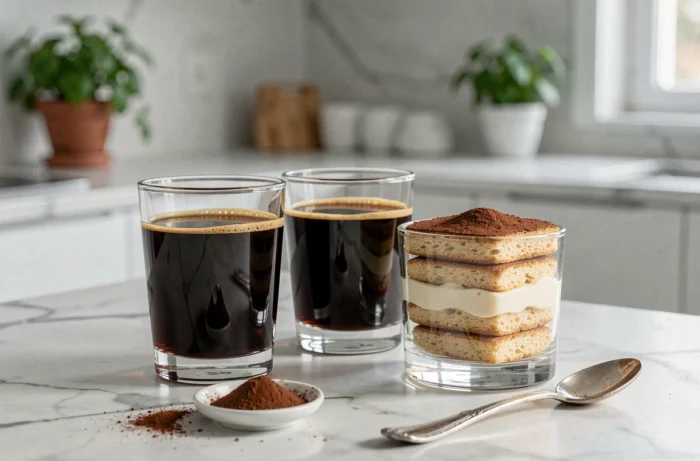
The dosage most commonly found in Italian recipes is around two to three tablespoons for four to six people. The alcohol is poured directly into the cooled coffee before dipping the ladyfingers.
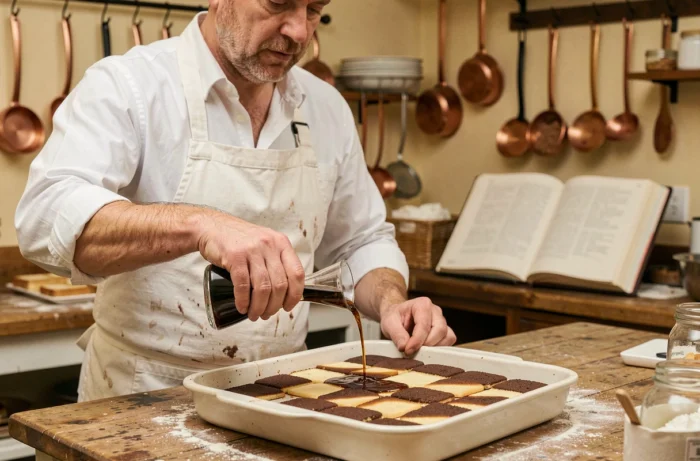
Dipping the biscuit for more than two seconds in the coffee-alcohol mixture is the classic trap. The savoiardo absorbs liquid very quickly. A soaked biscuit collapses under the weight of the cream, and the taste of alcohol takes over everything else.
Adjusting the dosage according to the chosen alcohol
Not all alcohols have the same aromatic intensity at equal volume. Marsala, being less concentrated than a liqueur, can handle a slightly more generous dose. Amaretto and rum, being more potent in flavor, require restraint.
- Dry marsala: three tablespoons in the coffee for six people, the profile remains subtle and woody.
- Amaretto: two tablespoons are sufficient, the sweet softness of the liqueur compensates for the lesser volume.
- Amber rum: a maximum of two tablespoons, beyond that the alcohol masks the flavor of the coffee and mascarpone.
You can also mix two alcohols, for example, one tablespoon of marsala and one tablespoon of amaretto, to achieve a profile that is both woody and slightly sweet. But combining more than two alcohols muddles the flavors instead of enriching them.
Alcohol-free tiramisu: viable alternatives
The historical recipe attributed to the restaurant Le Beccherie in Treviso does not contain alcohol. Six ingredients (mascarpone, eggs, coffee, savoiardi, sugar, cocoa) make up the base. Alcohol is a variation, not a condition of authenticity.
For a tiramisu intended for children or those who do not consume alcohol, simply replace the liqueur with vanilla or bitter almond extract. A few drops of bitter almond extract replicate part of the aromatic profile of amaretto without any alcohol content.
Point of caution regarding raw eggs
The choice between an alcoholic or non-alcoholic version does not resolve the issue of raw eggs. In a traditional tiramisu, the cream is not cooked. The added alcohol does not evaporate since there is no cooking. Santé publique France recommends avoiding homemade preparations with raw eggs during pregnancy.
One solution is to cook the yolks with sugar in a sabayon over a double boiler, then replace the whipped egg whites with whipped cream. Pasteurized mascarpone, on the other hand, poses no problem in itself. This results in a tiramisu with a creamy texture very close to the original, suitable for a wider audience.
Alcohol and fruit tiramisu: adapting the choice to the garnish
Tiramisu is not limited to the coffee-cocoa version. Fruit variations (strawberries, raspberries, mango) require a different alcohol than what is used with coffee.
- Strawberry or raspberry tiramisu: Grand Marnier or a red fruit liqueur pairs better than marsala, whose woody profile clashes with the acidity of the berries.
- Mango or exotic fruit tiramisu: amber rum finds its place here, its spicy notes enhance the roundness of the fruit.
- Lemon tiramisu: limoncello, Italian lemon liqueur, creates a direct aromatic coherence with the garnish.
The alcohol should enhance the flavor of the fruit, not compete with it. Using marsala in a strawberry tiramisu results in a confusing outcome. Each garnish calls for its own logic of pairing.
Tiramisu remains an assembly dessert, where each ingredient affects the final balance. The right alcohol is not the most expensive or the strongest; it is the one that recedes behind the mascarpone and coffee or the chosen fruit. Tasting the coffee-alcohol mixture before dipping the biscuits remains the most reliable gesture to check the balance.