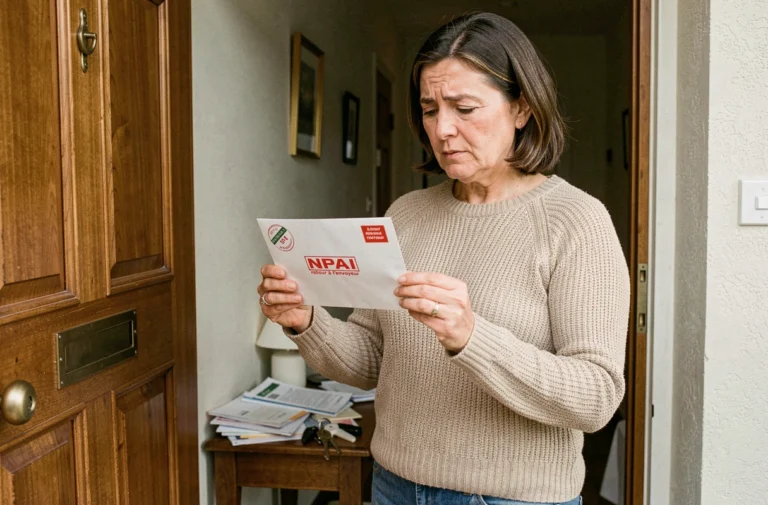
In France, at the beginning of 2025, 21% of people said they struggled financially at the end of the month after paying their regular expenses, according to an Insee publication updated in October 2026. This figure is a reminder that managing a budget is not just about how much you earn.
Insee also distinguishes disposable income from discretionary income, calculated after deducting expenses that are difficult to adjust quickly, such as housing, energy and insurance. Two households with similar incomes can therefore feel very different levels of budget pressure, depending on the share taken up by these pre-committed expenses.
Discretionary income and pre-committed expenses: the real starting point for a budget
Most budgeting methods start with monthly net income and then subtract fixed expenses. The problem is that this category covers a wide range of situations. Rent in a high-demand area, home insurance, energy bills based on actual consumption: these expenses take up a share of income that is difficult to negotiate in the short term.
The discretionary-income approach reverses this logic. Instead of listing what you spend, you first calculate what remains after pre-committed expenses. This balance is the amount actually available for food, leisure, savings and unexpected costs. Building your budget around this figure helps you avoid planning savings based on an unrealistic amount.
In practice, adding up all unavoidable expenses over the past three months gives you a reliable monthly average. Include quarterly or annual direct debits (property tax, car insurance, contributions) and divide them by 12 to get a monthly figure. This calculation often reveals a gap between what you think you spend and what actually leaves your account. Resources such as Finovista’s financial website can help you explore these concepts and fine-tune your personal finance tracking.

Bank overdrafts: a safety net under changing rules
An authorized overdraft has long served as an informal buffer for people struggling to make it to the end of the month. The regulatory status of this banking facility is changing. Rules on overdraft fees and stricter checks on borrowers’ ability to repay are changing the terms for accessing it.
For households that regularly relied on an overdraft to make ends meet, this change has practical consequences. Overdrafts are gradually coming under the rules for consumer credit, with stricter information and verification requirements for banks. The impact on access to overdrafts, particularly for low-income households, remains an open question for now: stronger consumer protections could also mean fewer overdraft options.
Taking this into account when planning your budget means no longer treating an overdraft as a resource that will automatically be available. Here are three practical ways to do without one:
- Build up a cash reserve equal to one month’s pre-committed expenses in an easily accessible account (such as a standard savings account), separate from your emergency savings fund.
- Reschedule annual or quarterly direct debits so they fall in different months by contacting the relevant organizations (insurers, tax authorities).
- Set up an automatic transfer to a secondary account on payday, before making any other payments, to ring-fence the non-negotiable part of your budget.
Regulated savings accounts in 2026–2027: what’s changing
Returns on regulated savings products directly affect the balance between emergency savings and spending. An increase in the Livret A rate has been discussed for February 2027, but for now this is only a projection, not a confirmed decision. For those who qualify, the Livret d’épargne populaire (LEP) pays 2.5% in 2026, making it the most attractive option for risk-free, short-term savings.
In addition, the government has announced plans to raise the Livret A deposit limit. The exact amount had yet to be set when the announcement was made, so the new limit is not yet in effect. If the measure goes ahead, it would increase the amount people can save without paying tax on the interest, changing the calculation for households whose accounts have already reached the current limit.
What this means for a monthly budget
It makes practical sense to reassess your emergency savings in light of these changes. A LEP paying 2.5% can partly offset the effects of inflation, provided you check your eligibility each year (which depends on your reference taxable income). Putting your emergency fund in the highest-yielding account available to you is a simple step, but one that is often overlooked.
Exposure to price increases also varies according to spending habits and where you live, as Insee points out. A rural household that depends on a car is not affected by inflation in the same way as an urban household that rents. Adjusting your emergency savings to match your actual spending profile, rather than following a generic rule, gives you a more reliable result.

A realistic budget: balancing expenses when there’s little room to maneuver
When discretionary income is low, the usual advice (go out less, cook more, cancel a subscription) quickly reaches its limits. The question becomes: which pre-committed expenses can you reduce, and how soon?
- Insurance (home, car, health) can be renegotiated each year when the policy comes up for renewal. Comparing offers before the cancellation deadline can sometimes save several dozen euros a month without reducing your level of coverage.
- In an open energy market, contracts can be compared based on the price per kWh and the standing charge. Switching suppliers does not result in any interruption to your service.
- Housing, the biggest expense, can only be renegotiated in the medium term (by moving or refinancing a loan). But it affects every other part of the budget: when housing costs exceed one-third of income, they automatically squeeze every other budget category.
Building a budget around your discretionary income, anticipating changes to overdraft terms and choosing the right account for your emergency savings are three complementary ways to manage your finances. None can solve a difficult situation on its own, but together they give you a clearer picture of your actual financial flexibility, month after month.