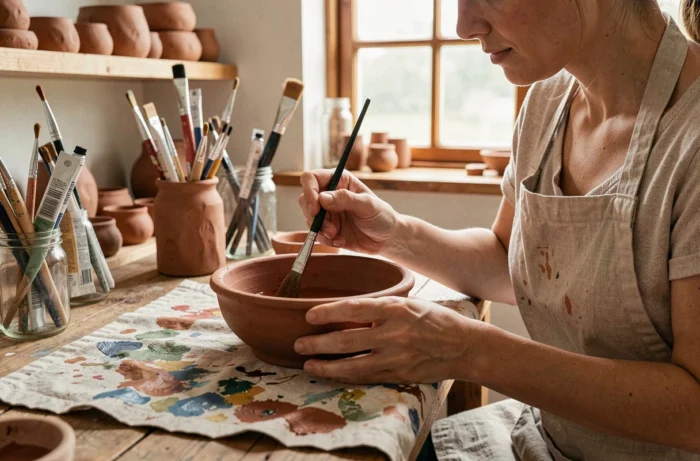
Air-dry clay dries in the open air thanks to the cellulose fibers and binders it contains. It is not fired in a pottery kiln. This makes it easier to create decorative pieces, but it also comes with limitations when it comes to adding color: the surface remains porous even after it has dried completely, and paint does not fundamentally change this property.
Drying air-dry clay: what happens beneath the surface
A thin piece may seem dry after one or two days. A thicker piece, however, can retain moisture at its core for much longer. Applying paint or varnish to a piece that is still damp inside traps moisture and can result in a cloudy finish, blisters, or peeling paint.
The only reliable indicator is an even color throughout the piece: if any areas are still darker, it has not finished drying. It is best to follow the manufacturer’s instructions and, for thicker shapes, double the drying time stated on the packaging.
This is also the stage when a light sanding with fine-grit sandpaper can help create an even surface. The tiny bumps on raw clay hold paint unevenly, resulting in uncontrolled variations in color. A quick pass with fine sandpaper, followed by dusting with a dry brush, is enough to prepare the surface. For a closer look at the preparation and decorating process, this complete guide explains how to paint air-dry clay using the right techniques at every stage.
Acrylic paint on air-dry clay: why it is the go-to choice and where it falls short
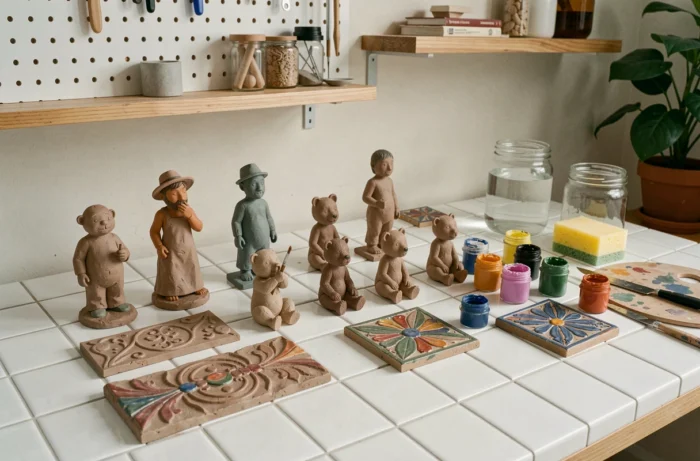
Acrylic paint is the most common choice for decorating air-dry clay. It adheres well to the porous surface, dries quickly, can be thinned with water, and is easy to clean up. When using it with children, checking the product label (compliance with toy safety standards and no solvents) is a sensible precaution.
Gouache and watercolor: limited alternatives
Gouache adheres to clay, but remains water-soluble once dry. Without a protective varnish, even a little moisture can erase the design. Watercolor has the same drawback, made worse by the porous surface, which absorbs pigment unevenly. Both mediums are suitable for purely decorative pieces kept in a dry environment.
Apply thin coats
A common mistake is loading the brush with paint to cover the surface in a single pass. On a porous surface, a thick coat dries on top before the solvent (water) has evaporated beneath it. The result: cracking and flaking.
- Apply a diluted first coat (about one-third water) to seal the pores and even out how the surface absorbs paint.
- Apply a second coat at normal consistency once the first is completely dry to achieve the final color.
- Apply a third coat only if coverage is still insufficient, allowing the same drying time between coats.
This thin-coat approach produces a cleaner result than one generous coat and reduces the risk of cracks in the paint film.
Varnish and protection: what varnishing does (and doesn’t do)
A matte or satin acrylic varnish applied over dry paint protects the color from rubbing and light wear. It also improves resistance to surface moisture. But it does not make the object waterproof.
Air-dry clay remains porous even when varnished. Water can seep in through uncovered edges, the underside of the piece, or the smallest crack. Varnish cannot turn a porous material into a watertight container.
Varnish therefore acts as a partial barrier. It extends the life of the design, helps prevent stains, and gives the piece a finished look. Waiting at least 24 hours after the final coat of paint before varnishing helps ensure better adhesion.
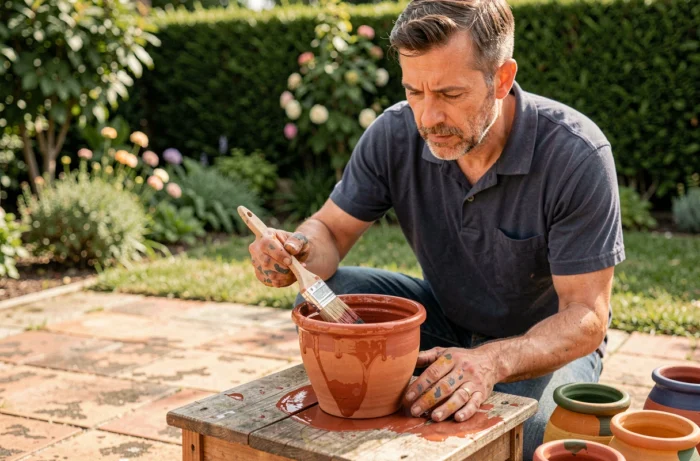
Air-dry clay in damp spaces: soap dishes, planter covers, and false promises
A soap dish placed beside a sink gets splashed every day. A planter cover watered weekly sits in residual water. These uses put air-dry clay to the test, no matter how many coats of varnish it has.
A varnished object is not suitable for prolonged contact with water. AMACO’s recommendations also limit its air-dry clays to decorative uses and specify that they are not waterproof. Varnish is not enough to make them safe for tableware or functional containers for liquids.
Practical solutions for a planter cover
The most reliable solution is to place a watertight inner container (plastic, glass, or metal pot) inside the clay planter cover. The clay serves a purely decorative purpose, while the inner container provides the waterproofing. This is a sensible compromise that avoids disappointment after a few weeks of use.
Soap dishes: limit direct contact
- Raise the soap on small supports (glass beads or silicone feet) so water can drain instead of pooling on the clay.
- Apply varnish to the underside and edges of the piece as well, not just the top.
- Accept that the piece will deteriorate faster than a fired ceramic soap dish: air-dry clay has a limited lifespan in a damp environment, even when well protected.
Being honest about the material’s limitations helps avoid frustration. A decorative object in a bathroom may last several months with regular care (wiping it dry after splashes and reapplying varnish occasionally), but it will never match a piece fired in a kiln.
Food contact and air-dry clay: a use to avoid
Standard air-dry clay is not designed for food contact, even when varnished. Some brands may leave room for doubt, but no consumer varnish certifies that the clay-and-varnish combination is food-safe. Pieces made from unfired clay should remain decorative objects: vases, sculptures, frames, and jewelry boxes.
For anyone looking to make functional bowls or plates, firing in a pottery kiln followed by a food-safe glaze remains the only reliable option. Air-dry clay excels in a different area: accessible crafting without specialized equipment, as long as you respect the material’s limitations.