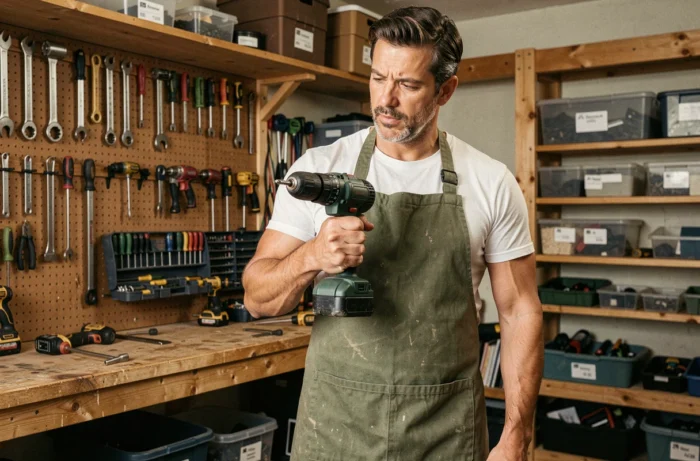
Between a cordless drill and a basic set of screwdrivers, the budget can vary tenfold. Choosing the right DIY equipment for your home means balancing versatility, frequency of use and actual running costs. Online guides often list the same tools without prioritising what really matters: equipment lifespan, safety during projects and how many different jobs a tool can handle.
DIY tools: comparing versatility and frequency of use
Not all tools offer the same value for money. A hammer may be used several times a week in a busy household, while a jigsaw might only come out two or three times a year. The table below ranks common tools by versatility and average frequency of use for a home DIYer.
| Tool | Versatility | Frequency of use | Purchase priority |
|---|---|---|---|
| Cordless drill/driver | High (drilling, driving screws, assembly) | Weekly to monthly | High |
| Screwdriver set (flathead + Phillips) | High | Weekly | High |
| Tape measure or laser level | Medium (measuring, alignment) | For every project | High |
| Jigsaw | Medium (cutting wood, PVC) | A few times a year | Medium |
| Orbital sander | Low (wood finishing) | Occasional | Low for beginners |
| Combination pliers | High (gripping, holding, wire cutting) | Weekly | High |
| Adjustable wrench | Medium (plumbing, bolts) | Monthly | Medium |
A drill/driver, tape measure and screwdrivers are enough to handle most household jobs. Beginners can stick to these three categories before investing in more specialised power tools.
To explore the available options by category, Bricotronique’s equipment range lets you filter tools by the type of project you have in mind.
DIY equipment budget: buying new, reusing or renting
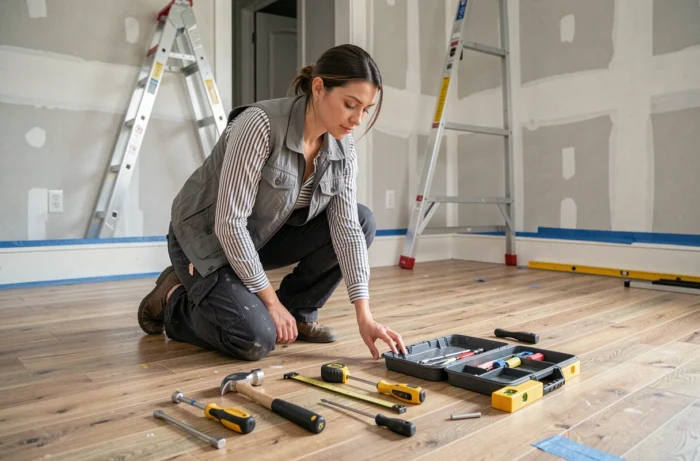
Buying every tool new is not always the best strategy. ADEME describes the growth of reuse and repair in France, supported by repair bonus schemes in several sectors, including DIY and gardening products. This trend changes the equation for occasional DIYers.
There are three practical options:
- Buying new makes sense for frequently used tools (drill, screwdrivers, tape measure), where reliability is essential for long-term safety and precision.
- Reuse or second-hand purchases are suitable for specialised tools used infrequently, such as a router or heat gun, provided you check the condition of the guards and cables.
- Renting is still a good option for heavy-duty or technical equipment (rotary hammer, scaffolding) needed for just one project.
Renting a specialised tool used twice a year costs less than buying it new. Reuse, meanwhile, lowers the upfront cost while extending the life of existing equipment.
Safety and protection: the overlooked part of your tool budget
Competitors go into great detail about drills and saws, but give little attention to protective accessories. Yet accidents during home improvement projects are still common, and many injuries could be prevented with the right safety equipment.
The protection you need depends directly on the tool you use. Drilling into concrete and sanding wood do not pose the same risks.
Dust and noise: two underestimated hazards in home DIY
When drilling, sanding or chiselling materials such as concrete, brick or tile, it is worth checking whether the tool can be fitted with an integrated dust extraction system. Capturing dust at the source is more effective than relying on a mask alone. The INRS recommends prioritising these collective protective measures against hazardous dust in professional settings, and the same principle applies to DIYers at home.
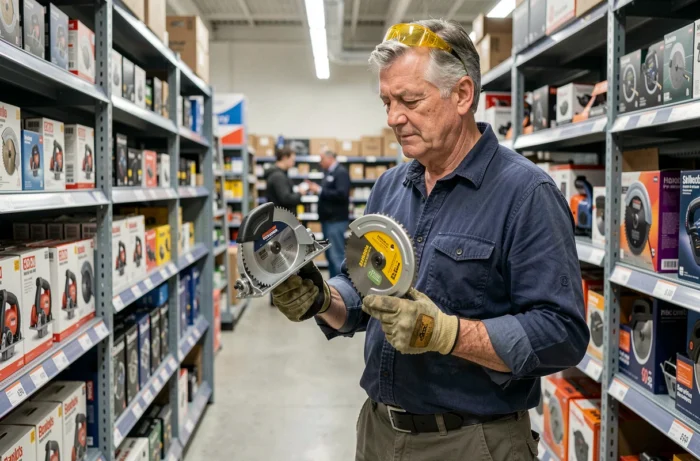
Noise is another risk that is often taken for granted. A circular saw or rotary hammer can produce noise levels that cause fatigue and loss of concentration, both direct causes of accidents. Ear protection, such as earmuffs or moulded earplugs, is available for just a few euros.
Detecting cables and preparing the work area
Before drilling into a wall, a cable and pipe detector can help prevent electric shocks and water damage. Rarely mentioned in basic tool lists, this accessory is part of your safety equipment, just like protective goggles.
Goggles, hearing protection, a cable detector and dust extraction form a basic safety setup that costs very little compared with a power tool.
Lifespan and maintenance: what sets good tools apart
A well-maintained tool can last for decades. A neglected one can lose precision within a few months. The difference is not down to the purchase price, but to two simple habits.
The first is to store each tool in a designated place, away from moisture. Corrosion on metal parts (saw blades, drill bits, pliers) affects cutting performance and increases the effort required, raising the risk of slipping.
A tool stored in a dry place and used for its intended purpose will retain its precision for much longer. The second habit is to use each tool as intended: a screwdriver is not a pry bar, and wire cutters are no substitute for a saw. Forcing a tool to do a job it was not designed for accelerates wear and creates dangerous situations.
These two principles also apply to power tools. The lithium-ion batteries in cordless drills lose capacity if left discharged for several weeks. Storing them partially charged in a temperate place helps preserve their runtime for years.
Choosing DIY equipment for your home comes down to three trade-offs: versatility first (the tools you use most often), safety next (the right protection for each type of job), and durability last (regular maintenance to avoid unnecessary replacements). A small, carefully chosen and properly maintained kit can handle the vast majority of household projects.