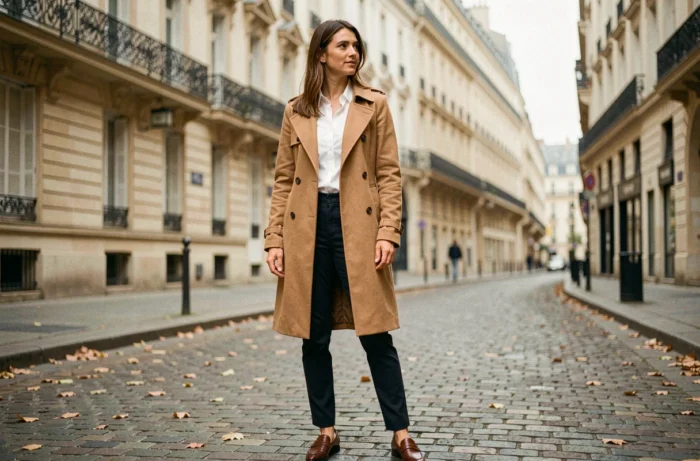
Adopting fashion trends without diluting the coherence of your wardrobe calls for a methodical approach. The usual reflex is to pile the latest pieces onto an ill-defined foundation, resulting in outfits that feel busy and are hard to wear. The real challenge lies elsewhere: identifying trends that work with your personal color palette, proportions, and lifestyle, then incorporating them in measured doses.
Trend-to-basics ratio: the one-third rule for everyday outfits
An elegant everyday outfit depends on a quantifiable balance. Just one trend-led piece per outfit is enough to update a look without throwing it off balance. The rest of the silhouette is built around basics whose cuts and colors have already earned their place in your wardrobe.
This ratio works because it limits visual clutter. Straight-leg jeans and a neutral ribbed sweater can accommodate an oversized jacket or a bright color without making the whole outfit look like runway costume. By contrast, three trend-led pieces worn together cancel one another out and make an outfit look dated sooner.
We find that the most functional wardrobes revolve around five to seven reliable basics (well-cut trousers, a plain shirt, quality knitwear, a trench coat or structured coat) that can anchor any seasonal piece. Invest in the construction and fabric of these foundations, not in the trend-led pieces themselves.
Specialist retailers such as Maison de Mode make it easier to find pieces that strike the right balance between lasting basics and current accents, without accumulating impulse buys.

Fashion trends and secondhand shopping: weigh up a purchase without expanding your wardrobe
Buying a secondhand trend-led piece instead of a new one changes the way you shop. The secondhand clothing market grows every year, driven by in-store sales and dedicated corners.
The idea is not to add a trend-led piece to your wardrobe, but to replace one. A patterned, flowing dress found in a thrift store takes the place of the one you have worn for three seasons, rather than piling up in your closet. This replacement approach is the only way to combine a style refresh with a manageable wardrobe.
Compare shopping channels before you take the plunge
The average price of a secondhand item varies considerably depending on where you shop. Peer-to-peer platforms offer the lowest prices, but you cannot try items on or check their actual condition. Physical thrift stores and charity shops let you check the fit, drape, and wear in person.
- On a peer-to-peer platform, ask for precise measurements (chest, back length, shoulder width) before buying, especially for a structured garment such as a blazer or coat.
- In a thrift store, always check the stretch of the fibers and the condition of the seams: fabric that has lost its shape cannot be restored, even with alterations.
- At a secondhand corner in a store, make use of the fitting rooms to check how the garment actually drapes, which can look quite different from what you imagine on a hanger.
Trending colors and your personal palette: filter before you buy
Each season brings its own colors. Pastels, deep greens, and saturated reds come back in cycles. A trending color is only worth buying if it works with the shades already in your wardrobe.
The most reliable test is to place the item you have your eye on next to three clothes you wear regularly. If it only goes with one of them, you will not wear it often enough to justify the purchase. This filter rules out most impulse buys driven by seasonal colors.
Accessories and color: the lowest-risk way to try a trend
To try a shade without committing to a clothing purchase, a colorful accessory (scarf, bag, belt) is enough to tap into the trend without changing the structure of your outfit. A scarf in the season’s color worn with a neutral monochrome look creates a clear contrast with no styling risk.
Accessories have another advantage: they are unaffected by changes in weight or body shape. A dyed leather belt or a structured bag in a bright color can be worn for several seasons, whereas trousers in the same color can become a burden as soon as the trend fades.
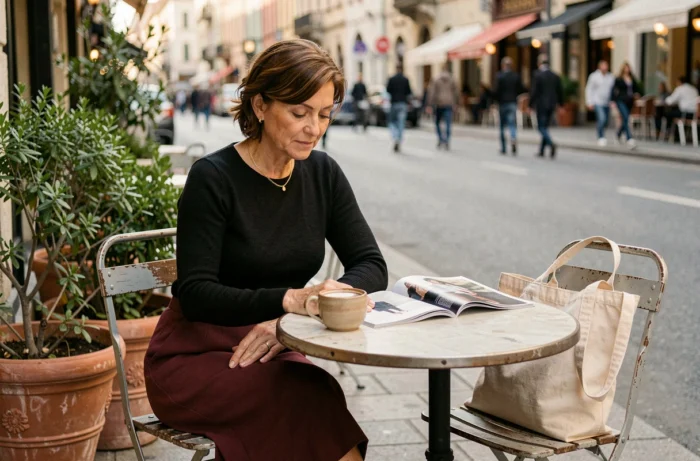
Textile ecodesign and sustainable style: what is changing under European rules
The European Ecodesign Regulation sets out specific requirements for textile products, with a phased rollout through delegated acts. For consumers who keep an eye on trends, this regulatory shift has a direct impact on what to look for when shopping.
Construction quality and fabric composition are becoming indicators of style as well as durability. A trend-led garment made from fabric that pills after three washes has no lasting style appeal, whatever its cut. Checking the fabric weight, seam consistency, and fiber content (the proportion of natural materials and whether recycled fibers are used) adds another filter to the aesthetic one.
This approach reflects a common-sense principle of dressing well: a well-made trend-led piece remains elegant even after the trend has passed, because its drape and fabric still look good. A slightly oversized blazer in a wool blend keeps its shape season after season. The same blazer in low-grade polyester loses its shape after just a few months.
- Check the composition on the label: choose a garment with a good proportion of natural fibers (cotton, wool, linen) or recycled fibers to help it last.
- Test how easily the fabric creases by squeezing it in your hand: fabric that quickly smooths out will hold up better to everyday wear.
- Look at the inside finishing (lining, topstitching, buttonholes): it reveals the quality of construction better than the price tag.
Everyday style is not built by following every trend, but by choosing the ones that fit into an already cohesive wardrobe. Your wardrobe itself is the most effective filter: if a piece does not work with what you already own, it does not belong, no matter how prominent it is on the runway.