Autumn-winter 2026-2027 fashion has a pronounced taste for exuberance and bold contrasts. Dramatic collars, jewelry worn over clothing, a return to maximalism: the runways sent out plenty of signals in favor of offbeat looks. But one practical question remains: do these unusual trends mean you have to refresh your wardrobe, or can you embrace them with what you already own?
Unusual autumn-winter 2026 trends: what the runways actually showed
| Trend | Item or technique | Does it require a new purchase? |
|---|---|---|
| Dramatic collar | Oversized collar, reimagined pussy-bow collar, voluminous coat collar | Not necessarily: a scarf tied like a collar or a detachable collar will do |
| Jewelry worn over clothing | Brooch on a turtleneck, chain over a blazer, XXL earrings | No: reuse existing jewelry in an unexpected way |
| Colorful maximalism | Saturated color combinations, mixed prints | Depends on your wardrobe: colorful pieces forgotten at the back of the closet can find a new purpose |
| Feathers and textures | Boas, feather details on shoulders or cuffs | Yes, unless you repurpose a scarf or vintage accessory |
This table highlights something that inspiration pages often overlook: most unusual trends are about placement, not the item itself. Wearing jewelry over a turtleneck instead of against bare skin changes the feel of an entire outfit without spending anything extra.
The runway shows covered by Vogue Adria and Vogue Arabia confirm that the collar has become the main focal point of the look this season. An oversized collar or a scarf styled into a sculptural shape can turn a basic coat into a statement piece.
The trends explored in Funny News’ fashion section illustrate the gap between what brands offer in stores and what you can already create with the clothes you own.
Creating an unusual look from your closet: three practical techniques
Putting together a look that makes people smile without buying anything new calls for styling skills, not shopping. Three approaches stand out in this season’s documented fashion practices.
Repurpose an accessory
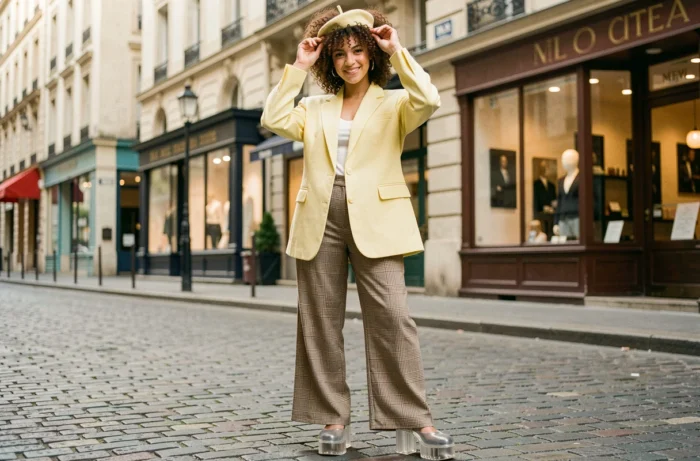
Wear your grandmother’s brooch on an oversized sweatshirt, tie a silk scarf around your waist as a belt with wide-leg jeans, or pair dangling earrings with a black turtleneck. Changing an accessory’s context creates an unexpected effect.
This technique works because the brain picks up on the contrast between the accessory’s style (precious, formal) and the garment’s (casual, everyday). The smile comes from that deliberate visual friction.
Mix contrasting styles from your existing wardrobe
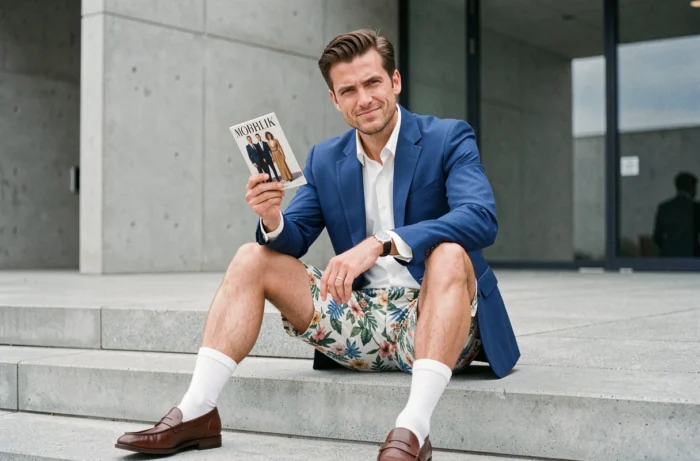
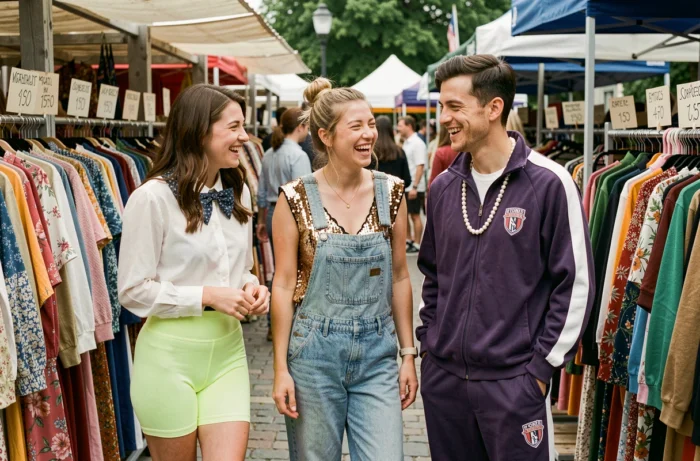
The colorful maximalism seen on the runways this season doesn’t require new clothes. Just pair two items you’ve never worn together: printed trousers with a top in a different print, or a dressy skirt with a sporty sweater.
- Pairing a summer dress with winter boots and a chunky cardigan creates a seasonal contrast that works in autumn
- Layering a sheer blouse over a graphic T-shirt mixes two styles without buying anything
- Wearing a structured blazer with joggers and statement jewelry creates exactly the kind of hybrid look highlighted on the runways
Contrasting styles can take the place of contrasting price tags. What makes an unusual look expensive is the boldness of the combination, not the price tag.
Make the collar your focal point
The dramatic-collar trend is easy to recreate. Fold a structured scarf into an origami shape, wear a shirt collar over a crew-neck sweater, or tie a fabric neckpiece asymmetrically: the area between the shoulders and chin draws the eye.
This approach has a practical advantage: it works even when the rest of the outfit is neutral. A statement collar is enough to make a monochrome outfit memorable.
Unusual fashion and fast fashion: the regulatory pressure in France
As the appetite for offbeat looks grows, regulations are tightening. France has introduced penalties targeting ultra-fast fashion as part of its extended producer responsibility (EPR) scheme. This measure raises costs for brands that turn over their collections at an excessive pace.
The connection to unusual trends is direct. Buying a novelty item for a single season and then throwing it away is part of the model the legislation aims to curb. Reinventing a look with pieces you already own aligns with the approach encouraged by the regulations.
Brands themselves are also under scrutiny. Investigations into the destruction of unsold stock have made headlines this season, adding to the pressure on the constant-newness model.
Autumn-winter style: what your closet can and can’t do
Repurposing has its limits. Some of this season’s trends are harder to recreate at home.
- Feather textures and boas require specific materials that are difficult to improvise without some sewing skills or a trip to a thrift store
- The architectural cuts seen at several fashion houses (structured shoulders, geometric volumes) depend on the garment’s pattern, not on an added accessory
- Very specific shades (deep burgundy, saturated forest green) aren’t found in every wardrobe
However, looks built around placement and mixing work with a basic wardrobe. A closet with a blazer, jeans, a scarf, a few pieces of jewelry and two colorful items can cover most of the unusual combinations documented this season.
The rule of thumb is simple: if a trend depends on a silhouette or a material, you’ll probably need to buy something. If it depends on how you wear it, your closet is enough. This season, most unusual fashion statements fall into the second category, making it easy to create a look that brings a smile without heading to the checkout.